

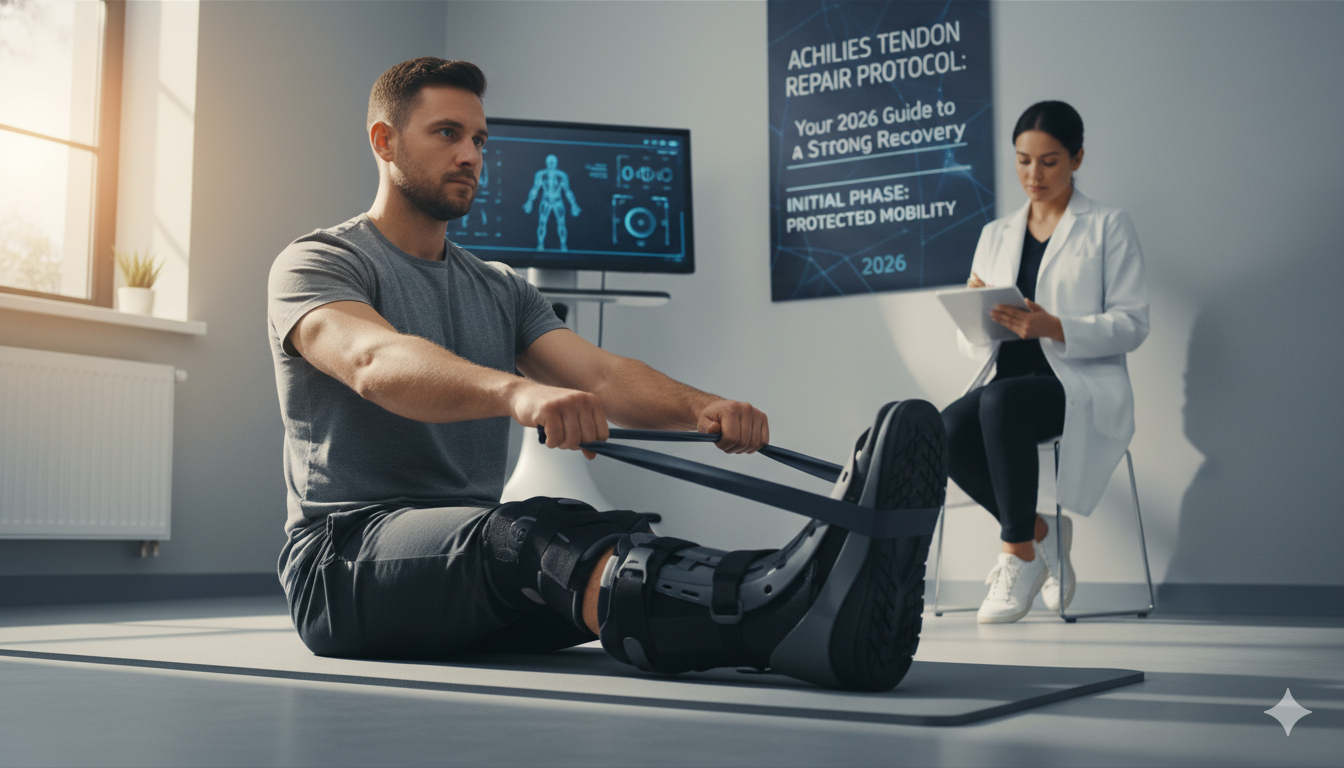
Tearing your Achilles tendon can feel like a major setback, but the recovery journey is a path many have walked successfully. When you start your Achilles Tendon Repair Protocol, the goal is to balance rest with steady movement. This process is not just about healing a physical gap in your heel; it is about retraining your body to trust itself again. In 2026, medical experts focus more than ever on “active recovery,” which means getting you moving safely as soon as possible. It is normal to feel a bit nervous about putting weight on your foot, but following a structured plan makes all the difference.
What Exactly is an Achilles Tendon Repair Protocol?
An achilles tendon repair protocol is a step-by-step map created by doctors and physical therapists. Think of it as a set of rules that tells you what you can and cannot do during each week of your recovery. Because the Achilles is the strongest tendon in your body, it needs special care to heal without getting too tight or too loose. In the past, people stayed in a heavy cast for months. Today, the achilles tendon repair protocol uses boots and specific stretches to keep the blood flowing and the muscles awake. This helps you avoid stiffness and get back to your favorite activities much faster.
Phase 1: Protecting Your Repair (Weeks 0–2)
The first two weeks of your achilles tendon repair protocol are all about protection. Right after surgery, your leg will likely be in a splint to keep your toes pointed slightly downward. This position takes the pressure off the new stitches. You will need to use crutches because putting weight on the foot too early can damage the repair. It is very important to keep your leg elevated to reduce swelling. I always tell people to keep their “toes above their nose” when resting on the couch. This simple trick helps manage pain and keeps the skin healthy as the incision heals.
Phase 2: Starting to Touch the Ground (Weeks 2–6)
During this part of the achilles tendon repair protocol, you usually move from a splint into a tall walking boot. This boot has special wedges inside it to keep your heel lifted. Your therapist will start a non-weight bearing or partial weight bearing plan where you slowly learn to stand. You might start doing gentle range of motion exercises, like wiggling your toes or moving your ankle up and down very slightly. This is also a great time to focus on scar tissue management by gently massaging the area around the cut once your doctor says it is closed and safe.
Phase 3: Learning to Walk Again (Weeks 6–12)
By week six of the achilles tendon repair protocol, life starts to feel a bit more normal. You will begin removing the wedges from your boot one by one. This lowers your heel toward the floor and stretches the tendon naturally. You will work on gait training, which is just a fancy way of saying “learning to walk without a limp.” Doing seated heel raises and using a stationary bike with very low resistance are common parts of the physical therapy routine now. This phase builds the foundation of strength you need for the months ahead.
Why Physical Therapy is Your Secret Weapon
You cannot finish an achilles tendon repair protocol successfully without a good physical therapist. They act like a coach for your leg. They use strengthening exercises to make your calf muscle big and strong again. Since your leg was in a boot for weeks, your muscles might look a bit smaller—this is called atrophy. Your therapist will use tools like blood flow restriction or manual therapy to wake those muscles up. They also ensure you are doing your home exercise program correctly so you don’t accidentally overstretch the healing tendon.
Essential Exercises for a Stronger Heel
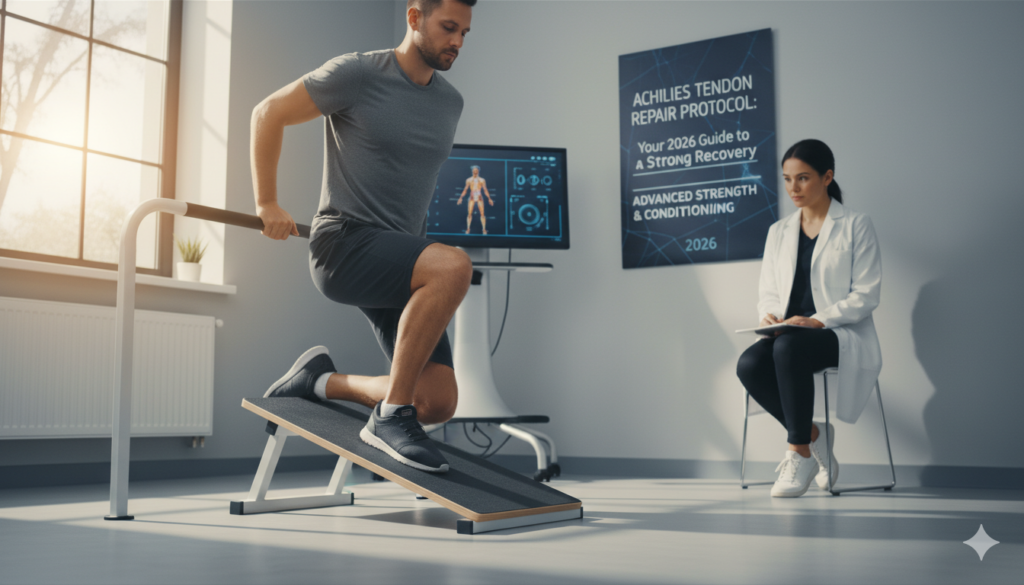
A big part of the achilles tendon repair protocol involves specific movements done at home. Early on, you might do isometric contractions, where you squeeze your calf muscle without moving the joint. Later, you will move to eccentric loading, which means strengthening the tendon as it gets longer. For example, standing on a step and slowly lowering your heel down is a classic move. These exercises are the “gold standard” for making the tendon tough. Always remember to move slowly and stop if you feel a sharp pain. Consistency is better than intensity during this stage.
Timeline of Recovery: What to Expect
| Recovery Phase | Timeline | Primary Goal | Typical Activity |
| Phase 1 | 0–2 Weeks | Protection & Healing | Crutches, leg elevation, rest. |
| Phase 2 | 2–6 Weeks | Early Movement | Walking boot with wedges, toe wiggles. |
| Phase 3 | 6–12 Weeks | Weight Bearing | Walking in shoes, calf stretches. |
| Phase 4 | 3–6 Months | Strength Building | Gym workouts, fast walking, biking. |
| Phase 5 | 6+ Months | Return to Sport | Running, jumping, agility drills. |
Managing Pain and Swelling at Home
It is common to have some discomfort during your achilles tendon repair protocol, especially after a long day of walking. Using ice packs for 20 minutes at a time can help numb the area and bring down inflammation. However, make sure you don’t put ice directly on your skin; wrap it in a thin towel instead. Proper post-operative care also involves eating healthy foods like protein and Vitamin C to help your body build new tissue. If you notice redness, warmth, or sudden calf pain, call your doctor right away to stay safe.
Returning to Sports and Running
Everyone wants to know when they can run again while following an achilles tendon repair protocol. Usually, jogging starts around the 4-to-6-month mark, but only after you pass certain strength tests. You need to be able to do about 20 single-leg heel raises perfectly before your therapist clears you to run. This ensures your surgical repair is strong enough to handle the impact. Transitioning back to sports like basketball or soccer takes even longer—often 9 to 12 months—because of the quick cutting and jumping involved in those games.
Success Tips for Your Recovery Journey
To get the best results from your achilles tendon repair protocol, patience is your best friend. It is easy to feel frustrated when you see others running while you are still limping, but everyone heals at a different speed. Wear supportive shoes even when you are just walking around the house. Avoid wearing flip-flops or going barefoot for the first few months, as your heel needs the extra cushion. Keep a journal of your progress; looking back and seeing how far you have come in just a few weeks can be a huge boost for your mood.

Conclusion: Stepping Into a Healthy Future
Completing an achilles tendon repair protocol is a big achievement that requires discipline and hard work. By following the stages of healing and listening to your medical team, you can regain your strength and return to the life you love. Remember that this journey is a marathon, not a sprint. Take it one day at a time, do your exercises faithfully, and stay positive. You have the power to come back stronger than ever! If you found this guide helpful, share it with someone else who might be starting their recovery journey today.
Frequently Asked Questions
1. How long does the achilles tendon repair protocol take?
The full process usually takes about 9 to 12 months. While you will be walking normally much sooner, it takes a full year for the tendon to regain its maximum strength for sports.
2. Can I drive while in the walking boot?
If the surgery was on your left foot and you drive an automatic car, you might be able to drive sooner. If it was your right foot, you generally cannot drive until you are out of the boot and have full control of your ankle.
3. When can I stop using crutches?
Most people stop using crutches between weeks 2 and 6, depending on how comfortable they feel putting weight on their boot as outlined in their achilles tendon repair protocol.
4. Is it normal for my ankle to feel stiff?
Yes, stiffness is very common. Because the tendon was repaired and held still, it takes time and physical therapy to make the joint flexible again.
5. What happens if I accidentally trip?
If you trip or fall, contact your surgeon immediately. They may want to do an ultrasound or exam to make sure the surgical repair is still intact.
